By 2026, crypto trading has become less about finding the next opportunity and more about managing complexity. Most traders no longer operate on a single exchange or hold a single asset. They move between spot and futures, centralized and decentralized platforms, cold wallets and hot wallets. In that environment, the biggest hidden risk is not volatility. It is losing visibility.
Many portfolios underperform not because trades are wrong, but because exposure is misunderstood. Positions overlap. Correlations spike. Fees quietly accumulate. By the time a trader realizes what is happening, the damage is already done.
This is why portfolio tracking has evolved from a convenience into a core risk management tool. The best portfolio trackers in 2026 do not just display balances. They help traders stay oriented, disciplined, and in control when markets move fast.
What Makes a Portfolio Tracker Professional Grade in 2026
A serious portfolio tracker does more than add numbers.
First, it must offer complete visibility across exchanges, wallets, and chains. Partial data creates false confidence.
Second, it must provide real time performance context. Profit and loss, allocation, and exposure must update as markets change.
Third, it must support decision making, not just reporting. Good trackers highlight risk concentration, fee drag, and portfolio drift before they become problems.
Professionals do not track portfolios to admire them. They track them to correct them.
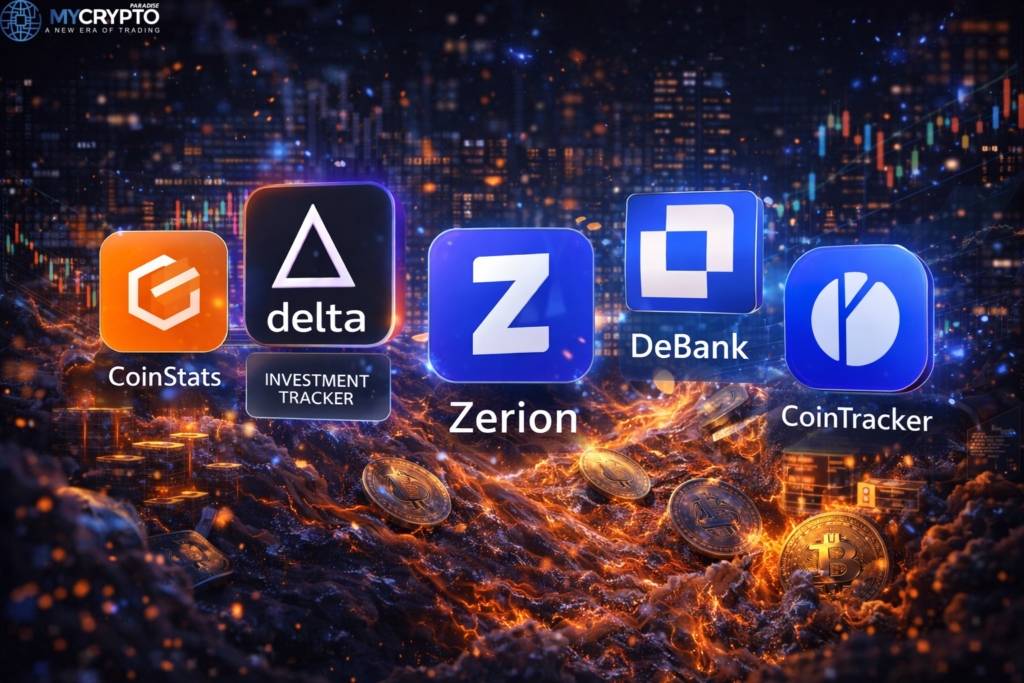
1. CoinStats
CoinStats remains one of the most widely used portfolio trackers in crypto, and in 2026 its relevance comes from balance. It offers broad exchange and wallet integrations while keeping the interface intuitive enough for daily use.
Professionals appreciate CoinStats for its clean allocation breakdowns and real time profit and loss tracking. It allows traders to see how capital is distributed across assets and platforms without manually reconciling data.
CoinStats also includes alerts and performance analytics that help traders identify when exposure grows unintentionally. While it does not replace deeper risk dashboards, it excels as a central visibility layer for active traders managing multiple accounts.
For traders who want clarity without complexity, CoinStats remains a dependable option.
2. Delta Investment Tracker
Delta has evolved significantly by 2026, positioning itself closer to a full investment intelligence platform. Beyond crypto, it supports equities and other assets, which appeals to traders managing diversified portfolios.
What sets Delta apart is its focus on historical performance and comparative analytics. Traders can track how strategies perform over time and benchmark decisions against broader market movements.
Delta’s strength lies in its visualization. It makes drawdowns, recovery periods, and asset rotation easier to understand at a glance. This perspective helps professionals avoid overreacting to short term volatility.
For traders who view crypto as part of a broader capital strategy, Delta provides valuable context.
3. Zerion
Zerion has become a leading portfolio tracker for decentralized finance. Its core strength is onchain visibility. In 2026, as more capital flows through DeFi protocols, Zerion helps traders understand positions that traditional trackers often miss.
Zerion automatically tracks wallets, protocols, liquidity positions, and yield exposure across multiple chains. This is critical for traders operating beyond centralized exchanges.
The platform’s weakness is that it focuses primarily on onchain assets. For traders heavily involved in centralized derivatives, it functions best as a complementary tool rather than a standalone solution.
For DeFi focused professionals, Zerion provides clarity in an otherwise fragmented ecosystem.
4. DeBank
DeBank serves a similar audience to Zerion but with a stronger emphasis on protocol level analytics. It not only shows what a trader holds, but where yield is generated and how positions interact with DeFi infrastructure.
Professionals use DeBank to monitor exposure to smart contract risk, liquidity pools, and lending platforms. In volatile conditions, this insight can be critical for reducing exposure before systemic stress escalates.
DeBank is less concerned with aesthetics and more with information density. It appeals to traders who want depth over simplicity.
5. CoinTracker
CoinTracker occupies a different niche. Its primary value lies in compliance and reporting rather than active trading.
In 2026, as regulatory oversight expands, accurate transaction history and tax reporting have become non negotiable for many traders. CoinTracker automates this process, reducing administrative risk and freeing traders to focus on strategy.
While CoinTracker is not designed for real time trading decisions, it plays a vital role in long term portfolio management. For professionals, operational clarity is as important as market performance.
Comparison: Best Portfolio Trackers for Crypto in 2026
| Platform | Best For | Core Strength | Limitation |
| CoinStats | Active traders | Broad integrations and real time PnL | Limited DeFi depth |
| Delta | Multi asset investors | Historical and comparative analytics | Slower DeFi updates |
| Zerion | DeFi traders | Onchain portfolio visibility | Limited centralized coverage |
| DeBank | Yield focused users | Protocol level insights | Information dense |
| CoinTracker | Compliance focused traders | Tax and reporting automation | Not for active trading |
How Professionals Actually Use Portfolio Trackers

Professionals rarely rely on a single tracker.
They use one tool for centralized exchange exposure, another for DeFi positions, and a third for reporting and compliance. This layered approach reduces blind spots and improves decision quality.
The goal is not to track everything perfectly, but to see risk clearly enough to act early.
FAQs: Crypto Portfolio Tracking in 2026
Do portfolio trackers improve trading performance?
Indirectly, yes. They improve decision making and risk awareness.
Should I connect all exchanges and wallets?
Yes. Partial tracking creates false confidence.
Are portfolio trackers safe to use?
Reputable trackers use read only API access, reducing security risk.
Do professionals track portfolios daily?
Yes. Visibility is continuous, not occasional.
Is one tracker enough?
Often no. Different tools serve different purposes.
In 2026, control is not about prediction. It is about awareness.
The best portfolio trackers do not make trades for you. They help you understand what you already own, where your risk truly lies, and when exposure needs to change.
In fast moving markets, clarity is an edge. And portfolio tracking is how professionals maintain it.
Where Traders Learn to Manage Portfolios Professionally
Tracking is only the first step. Interpreting what you see and acting with discipline is what separates professionals from participants.
This is why many traders continue refining their portfolio frameworks through MCP University, where allocation, risk, and execution are taught as connected systems.
In crypto trading, staying in control begins with seeing clearly.